Courses & Skills
Selected coursework and practical skills in biology, genomics, and quantitative analysis.
Graduate coursework
Programming for BiologistsFall 2025 · Grade: A
Python and Linux for biological data analysis, including file processing, reusable functions, and debugging. Sequence analysis with Biopython and BLAST; data handling and visualization with NumPy, pandas, and SciPy.
Statistics in BiologyFall 2025 · Grade: A
Statistical analysis in R, from experimental design and hypothesis testing to regression and ANOVA. Bootstrap and permutation methods, with attention to model assumptions, uncertainty, and interpretation of biological data.
Genomics of Human PopulationsFall 2025 · Grade: A
Genomic approaches to population history, migration, and natural selection. Analysis of linkage disequilibrium, population structure, and admixture in R, connecting patterns of genetic variation with evolutionary processes.
Biological Databases & DataminingSpring 2026 · Grade: A
Relational database design and SQL queries with MySQL and SQLite. Biological data mining through clustering, classification, and regression, including applications to gene-function prediction and integration of genomic information.
Evolutionary Genetics & GenomicsSpring 2026 · Grade: A−
Critical reading of research on speciation, genome evolution, phylogenomics, and genotype–phenotype relationships. Evaluation of figures and analytical evidence, alongside literature synthesis and scientific writing.
Applied GenomicsSpring 2026 · Grade: A−
Sequencing workflows on Linux and HPC, including SLURM, quality control, alignment, and quantification. An individual pine RNA-seq project on NLR expression, using Salmon/tximport, DESeq2, Mfuzz, and WGCNA, with R Markdown documentation and a Shiny dashboard.
Population Genetics and Evolutionary Biology for BioinformaticsFall 2026 · In progress
Comparative and population-genomic approaches to evolutionary questions: phylogenetic reconstruction, orthology, synteny, population structure, and adaptation. Interpretation of genomic variation in studies of traits and disease.
Machine Learning in Medicine and BiologyFall 2026 · In progress
Predictive modeling for biological and medical data, including regression, classification, decision trees, random forests, support vector machines, and neural networks. Model selection, cross-validation, and assessment of generalization and limitations.
Undergraduate foundations
| Course | Grade | Course | Grade |
|---|---|---|---|
| Evolutionary Biology | 95 | Ecology | 93 |
| Plant Systematics | 94 | Bioinformatics | 91 |
| Experimental Design and Statistical Analysis | 94 | Linear Algebra | 96 |
| Course | Grade | Course | Grade |
|---|---|---|---|
| Botany | 91 | Zoology | 94 |
| Biochemistry | 94 | Genetics | 92 |
| Cell Biology | 94 | Plant Physiology | 90 |
| Animal Physiology | 92 | Immunology | 95 |
| Course | Grade | Course | Grade |
|---|---|---|---|
| Genetics Laboratory | 98 | Cell Biology Laboratory | 96 |
| Plant Physiology Laboratory | 96 | Animal Physiology Laboratory | 94 |
| Biochemistry Laboratory | 90 | Microbiology Laboratory | 95 |
| Molecular Biology Laboratory | 88 | Plant Tissue Culture | 95 |
| Botany Laboratory | 94 | Zoology Laboratory | 95 |
| Botany Fieldwork | 96 | Zoology Fieldwork | 94 |
| Biological Research Methods | 98 | Laboratory Safety | 93 |
Skills in practice
- HPC & Linux
- Linux/Bash and Slurm job arrays for running genomic workflows on HPC. Reproducible analysis with Git, Jupyter, R Markdown, and Shiny.
- Programming & data visualization
- Python (NumPy, pandas, Biopython) and R (tidyverse, ggplot2) for data processing and visualization; Adobe Illustrator for figure preparation. SQL with MySQL and SQLite.
- Genomics
- RNA-seq quality control and differential expression; de novo transcriptome assembly and evaluation; gene-family analysis, phylogenetics, population genomics, and VCF processing.
- Statistical training
- Hypothesis testing; linear and logistic regression; ANOVA; PCA; bootstrap and permutation tests; false discovery rate control.
- Machine learning
- Scikit-learn, classification, and cross-validation.
- Wet-lab methods
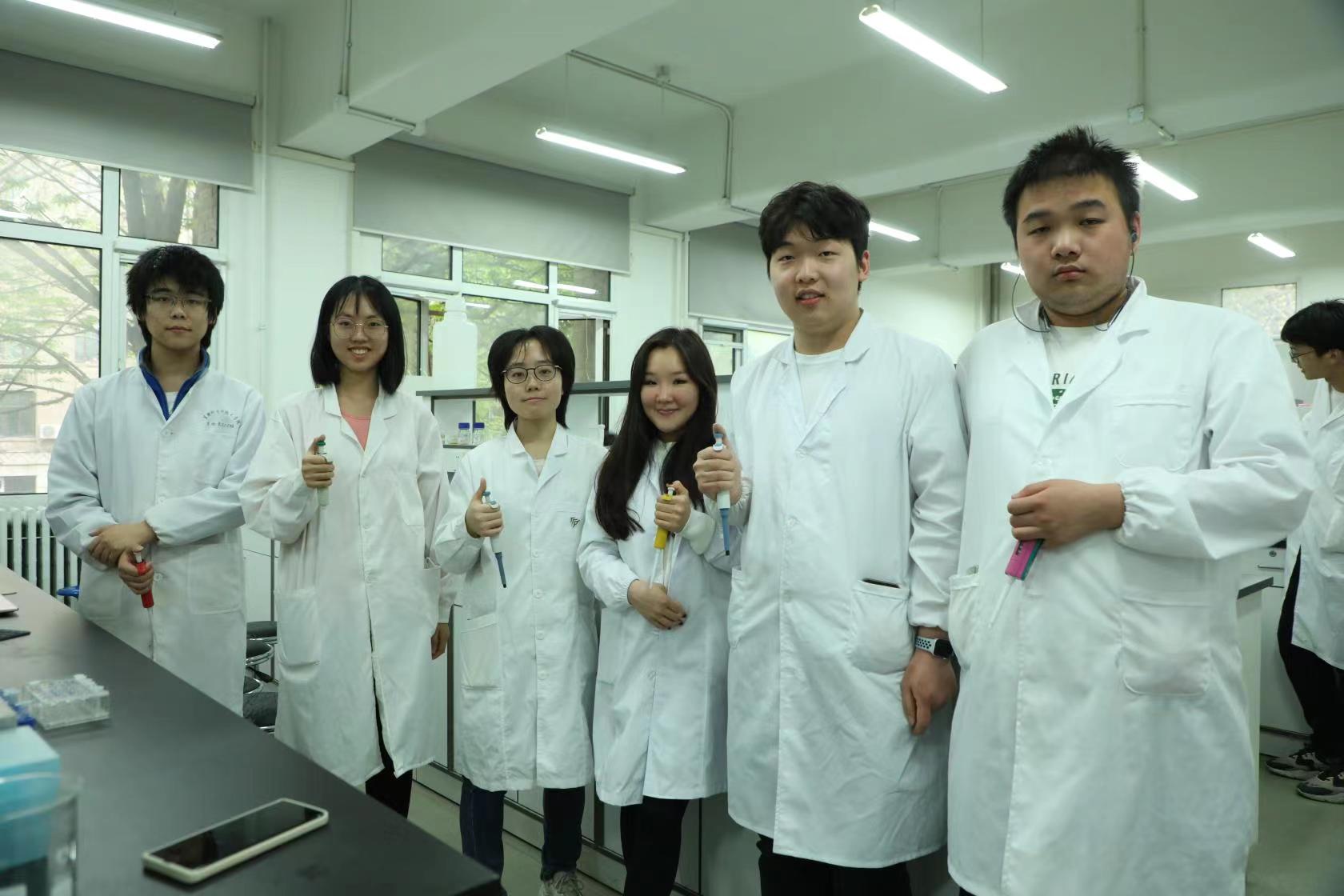
- RT-PCR, gel electrophoresis, fluorescence staining, and Western blot.
- Field methods
- Ecological and medicinal-plant surveys; botanical and zoological specimen collection and identification; field study design and team coordination.
Academic transcripts
New York University
Graduate record · issued September 9, 2026 · cumulative GPA 3.889/4.0
Beijing Forestry University
Undergraduate academic record · issued June 25, 2024